Climate Adaptation Summit
Virtual
REGISTER HERE
November 20, 2020
9:00–11:45 am
A link to join will be emailed to registrants prior to 11/20.
DRAFT Agenda
Print-friendly Agenda COMING SOON (pdf)
| 9:00 - 9:45
|
Welcome and Introduction
|
| 9:45 - 10:20
|
Keynote - Climate Change, Equity, and Environmental Justice
|
| 10:20 - 10:30 | Break |
| 10:30 - 11:30 | Concurrent Breakout Sessions (Breakout Session Summaries are below the Agenda) |
Track Topics |
Speakers & Moderators |
| Track 1 Resilience Planning: Challenges, Opportunities and Interconnections
|
Speakers:
|
| Track 2 Building Technical Capacity and Tools for Resilience
|
Speakers:
|
| Track 3 Climate Adaptation Policy and Financing
|
Speakers:
|
| 11:30 – 11:45 | Closing Remarks and Next Steps
TBD |
Breakout Session Summaries
Session A (1:30 - 2:30)
Track 1 – Resilient Transit Oriented Development
Summary: Coastal adaptation will be expensive and complicated and often implicates private property, public spaces, infrastructure and state concerns. Framing climate adaptation as an economic development approach positions costly adaptation investments as urban redevelopment and provides value-added solutions for municipalities. This session will feature a presentation and discussion on the concept of “Resilience Corridors”. Resilience corridors combine transit-oriented development (TOD) as an investment framework, configured as a corridor reinforcing evacuation routes, thus aligning economic investment with egress linking critical facilities (hospitals, fire stations, power generation), utilities and infrastructure, and other forms of emergency preparedness and disaster management strategies into investment zones. The resilience corridor creates an urban development strategy that the state can target to avoid investing in project areas with repetitive flood loss homes or low-lying areas that provide short-term value.
Facilitator: Alex Felson, CIRCA Deputy Director and Director of Resilience Design
Panelists:
- Norman Garrick, Professor, UConn Department of Civil and Environmental Engineering
- David Kooris, Deputy Commissioner, Connecticut Department of Economic and Community Development
- David Elder, Supervising Transportation Manager, Connecticut Department of Transportation
Track 2 – Drinking Water Vulnerability
Summary: With changing precipitation patterns, sea level rise, and drought anticipated in the coming decades, state officials and local planners are considering ways to address the impacts of climate change on Connecticut’s drinking water supply. This session will feature remarks from Lori Mathieu, Public Health Section Chief at the Connecticut Department of Public Health. The session will also include an overview of recent climate trends and projections for precipitation patterns and how these will impact water systems state-wide, highlights from Connecticut’s new Drinking Water Vulnerability Assessment and Resilience Plan, survey feedback from community water systems managers, recommendations for regional drinking water resilience, and discussion of upcoming water system vulnerability assessment requirements of America’s Water Infrastructure Act.
Facilitator: Katie Lund, CIRCA Director of Engagement
Panelists:
- Lori Mathieu, Public Health Section Chief, Connecticut Department of Public Health, Drinking Water Section
- David Murphy, Manager of Water Resources Planning, Milone & MacBroom
- Christine Kirchhoff, Professor, UConn Department of Civil and Environmental Engineering
Track 3 – Vulnerability Assessment Demonstration and Application
Summary: An understanding of the spatial nature of an area’s physical, biological, and social characteristics is needed to identify strategies for responding to sea-level rise. To meet this need, the Resilient Connecticut project is developing a spatial index-based approach to model vulnerabilities for Connecticut coastal towns in multi-scale and with multi-criteria. This session will describe the methodology and application of CIRCA’s interactive vulnerability assessment beta-viewer. A demonstration will be given to show how impacts are reflected in bio-physical and social vulnerabilities that affect a selected coastal, regional, city, or even a user-defined area. The demonstration uses GIS layers illustrating spatial information including coastal exposure, natural habitats, salt water intrusion, critical facilities, and transportation networks. Jessica LeClair from Sustainable CT joins as a panelist to highlight how their certification program addresses resiliency and municipal vulnerability assessment. Panelists and the audience will then discuss benefits and concerns about this tool for regional, municipal, and site scale planning to help tackle the challenges of future sea-level rise and associated flooding.
Facilitator: Joanna Wozniak Brown, Senior Resilience Planner, CIRCA
Panelists:
- Jessica LeClair, Program Manager - Community Engagement & Outreach, Sustainable CT
- Yaprak Onat, Assistant Director of Research, CIRCA
- Caterina Massida, Data Analyst, CIRCA
Slides in order of breakout topic and presenters:
| Resilience Planning: Challenges, Opportunities and Interconnections | |
| Building Technical Capacity and Tools for Resilience | |
| Vulnerability Assessment Demonstration and Application | |
| Climate Adaptation Policy and Financing |
|
Funding for this project is provided by the United States Department of Housing and Urban Development through the Community Block Grant National Disaster Recovery Program, as administered by the State of Connecticut’s Department of Housing.

WELCOME ADDRESS
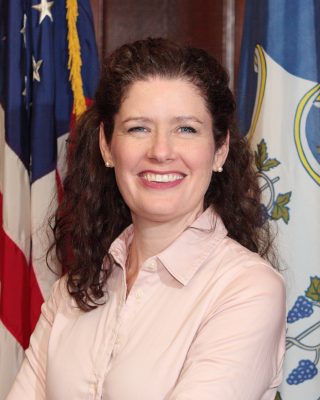
Katie Dykes was nominated by Governor Ned Lamont to serve as the Commissioner of Connecticut’s Department of Energy and Environmental Protection (DEEP), and was confirmed on February 20, 2019. Katie previously served as Chair of the Connecticut Public Utilities Regulatory Authority (PURA) from 2015-2018, and as Deputy Commissioner for Energy at Connecticut DEEP from 2012-2015. Katie joined CT DEEP in March 2012 after prior service as Deputy General Counsel for the White House Council on Environmental Quality and as a Legal Advisor to the General Counsel for the U.S. Department of Energy. She is a graduate of Yale College and the Yale Law School.

KEYNOTE ADDRESS
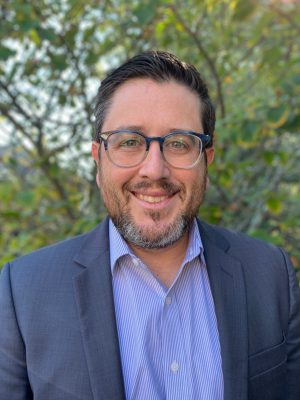
Shaun O’Rourke is Director of Stormwater and Resiliency at Rhode Island Infrastructure Bank and Chief Resilience Officer for the State of Rhode Island. Prior to joining RIIB, Shaun served as the National Green Infrastructure Director at The Trust for Public Land and was Director of Sustainable Design at the Boston Architectural College, where he continues to serve as a member of the faculty. He has also worked at AECOM in New York City as an Ecological Designer focusing on public sector infrastructure projects. Shaun holds a Master of Landscape Architecture degree from SUNY College of Environmental Science and Forestry and a B.S from University of Vermont.
LOCATION
Virtual
CONTACT
John Truscinski, CIRCA Director of Resilience Planning
| Phone: | 860.405.9252 |
|---|---|
| Email: | john.truscinski@uconn.edu |